

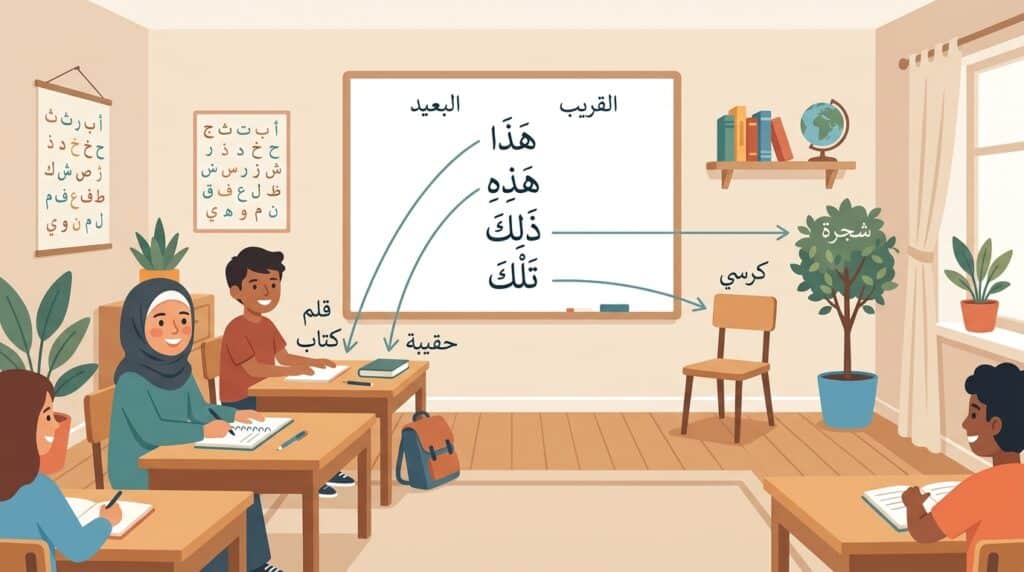
In grammar, demonstrative pronouns are words such as “this,” “that,” “these,” and “those.” In English, they help us point to people or things and show whether they are near or far. Arabic works in a similar way, but the system is richer and more precise. In addition to distance, Arabic demonstratives also reflect gender and sometimes number in ways that English does not.
For beginners, learning arabic demonstrative pronouns is one of the most useful early grammar steps, because these forms appear constantly in basic sentences: “this book,” “that girl,” “these students.” Once you understand them, it becomes much easier to build simple Arabic sentences correctly and naturally. This guide explains the full system clearly, including the common beginner question about hatha hathihi meaning.
What Are Demonstrative Pronouns in Arabic Grammar?
In Arabic grammar, demonstratives are called اِسْمُ الإِشَارَةِ (ism al-ishārah), literally “the noun of pointing.” They identify a person, thing, or group by pointing to it in relation to the speaker.
English has a small set: this, that, these, those. Arabic has more forms because it marks distinctions that English usually does not:
- Gender: masculine vs feminine
- Number: singular, dual, and plural
- Proximity: near vs far
This is why Arabic has more demonstrative forms than English. For example, English says “this” for both “this book” and “this car,” but Arabic changes the form depending on whether the noun is masculine or feminine:
- هَذَا الكِتَابُ (hādhā al-kitābu) — this book
- هَذِهِ السَّيَّارَةُ (hādhihi al-sayyāratu) — this car
Arabic also has a dual, a special form for exactly two items, which English does not mark separately. That makes Arabic demonstratives more detailed, but once the pattern is clear, they are quite systematic.
The Complete List of Arabic Demonstrative Pronouns
1) هَذَا (hādhā) — “this”
Use: masculine singular, near
Use هَذَا with a masculine singular noun that is near the speaker.
Examples
هَذَا الكِتَابُ مُفِيدٌ.
(hādhā al-kitābu mufīdun.)
This book is useful.هَذَا الوَلَدُ نَشِيطٌ.
(hādhā al-waladu nashīṭun.)
This boy is energetic.
2) هَذِهِ (hādhihi) — “this”
Use: feminine singular, near
Use هَذِهِ with a feminine singular noun that is near.
Examples
هَذِهِ البِنْتُ ذَكِيَّةٌ.
(hādhihi al-bintu dhakiyyatun.)
This girl is intelligent.هَذِهِ السَّيَّارَةُ جَدِيدَةٌ.
(hādhihi al-sayyāratu jadīdatun.)
This car is new.
3) ذَٰلِكَ / ذَاكَ (dhālika / dhāka) — “that”
Use: masculine singular, far
These refer to a masculine singular noun that is farther away. In formal Modern Standard Arabic, ذَٰلِكَ is more common than ذَاكَ.
Examples
ذَٰلِكَ البَيْتُ بَعِيدٌ.
(dhālika al-baytu baʿīdun.)
That house is far.ذَٰلِكَ الرَّجُلُ طَبِيبٌ.
(dhālika al-rajulu ṭabībun.)
That man is a doctor.
4) تِلْكَ (tilka) — “that”
Use: feminine singular, far
Use تِلْكَ with a feminine singular noun that is farther away.
Examples
تِلْكَ المَدْرَسَةُ كَبِيرَةٌ.
(tilka al-madrasatu kabīratun.)
That school is big.تِلْكَ الشَّجَرَةُ طَوِيلَةٌ.
(tilka al-shajaratu ṭawīlatun.)
That tree is tall.
5) هَذَانِ / هَاتَانِ (hādhāni / hātāni) — “these two”
Use: dual, near
- هَذَانِ = masculine dual
- هَاتَانِ = feminine dual
Arabic has special demonstratives for exactly two things.
Examples
هَذَانِ الطَّالِبَانِ مُجْتَهِدَانِ.
(hādhāni al-ṭālibāni mujtahidāni.)
These two students are hardworking.هَاتَانِ السَّيَّارَتَانِ سَرِيعَتَانِ.
(hātāni al-sayyāratāni sarīʿatāni.)
These two cars are fast.
6) ذَانِكَ / تَانِكَ (dhānika / tānika) — “those two”
Use: dual, far
- ذَانِكَ = masculine dual
- تَانِكَ = feminine dual
These are the far forms for exactly two items. They are correct, though less frequent in everyday beginner materials than singular forms.
Examples
ذَانِكَ الكِتَابَانِ قَدِيمَانِ.
(dhānika al-kitābāni qadīmāni.)
Those two books are old.تَانِكَ البِنْتَانِ أُخْتَانِ.
(tānika al-bintāni ukhtāni.)
Those two girls are sisters.
7) هَؤُلَاءِ (hā’ulā’i) — “these”
Use: plural, near, both genders
Use هَؤُلَاءِ for plural human nouns nearby, whether masculine or feminine.
Examples
هَؤُلَاءِ الطُّلَّابُ فِي الصَّفِّ.
(hā’ulā’i al-ṭullābu fī al-ṣaffi.)
These students are in the classroom.هَؤُلَاءِ النِّسَاءُ مُعَلِّمَاتٌ.
(hā’ulā’i al-nisā’u muʿallimātun.)
These women are teachers.
8) أُولَٰئِكَ (ulā’ika) — “those”
Use: plural, far, both genders
Use أُولَٰئِكَ for plural human nouns farther away.
Examples
أُولَٰئِكَ الرِّجَالُ مُسَافِرُونَ.
(ulā’ika al-rijālu musāfirūna.)
Those men are traveling.أُولَٰئِكَ الفَتَيَاتُ مُجْتَهِدَاتٌ.
(ulā’ika al-fatayātu mujtahidātun.)
Those girls are hardworking.
هذا vs هذه vs ذلك vs تلك — Key Differences Explained and hatha hathihi meaning
If you only remember one rule at first, remember this:
- هَذَا = this, masculine, near
- هَذِهِ = this, feminine, near
- ذَٰلِكَ = that, masculine, far
- تِلْكَ = that, feminine, far
So the beginner question about hatha hathihi meaning is simple at its core:
- هَذَا (hādhā) means “this” for a masculine noun.
- هَذِهِ (hādhihi) means “this” for a feminine noun.
A useful analogy is to imagine Arabic asking two questions at once:
- Is it near or far?
- Is the noun masculine or feminine?
That gives you this basic map:
| Near/Far | Masculine | Feminine |
|---|---|---|
| Near | هَذَا (hādhā) | هَذِهِ (hādhihi) |
| Far | ذَٰلِكَ (dhālika) | تِلْكَ (tilka) |
For example:
- هَذَا القَلَمُ (hādhā al-qalamu) — this pen
- هَذِهِ الحَقِيبَةُ (hādhihi al-ḥaqībatu) — this bag
- ذَٰلِكَ القَلَمُ (dhālika al-qalamu) — that pen
- تِلْكَ الحَقِيبَةُ (tilka al-ḥaqībatu) — that bag
Comparison Table: Arabic Demonstrative Pronouns
| Arabic form | Transliteration | English meaning | Gender | Number | Proximity |
|---|---|---|---|---|---|
| هَذَا | hādhā | this | masculine | singular | near |
| هَذِهِ | hādhihi | this | feminine | singular | near |
| ذَٰلِكَ / ذَاكَ | dhālika / dhāka | that | masculine | singular | far |
| تِلْكَ | tilka | that | feminine | singular | far |
| هَذَانِ | hādhāni | these two | masculine | dual | near |
| هَاتَانِ | hātāni | these two | feminine | dual | near |
| ذَانِكَ | dhānika | those two | masculine | dual | far |
| تَانِكَ | tānika | those two | feminine | dual | far |
| هَؤُلَاءِ | hā’ulā’i | these | both genders | plural | near |
| أُولَٰئِكَ | ulā’ika | those | both genders | plural | far |
Grammatical Rules and Agreement
Arabic demonstratives must agree with the noun they refer to in gender and, in many cases, number.
1) Match the noun’s grammatical gender
Use the form that matches the noun, not what “feels” masculine or feminine in English.
- هَذَا البَابُ (hādhā al-bābu) — this door
- هَذِهِ النَّافِذَةُ (hādhihi al-nāfidhatu) — this window
2) Match the number
Arabic distinguishes:
- singular
- dual
- plural
So you say:
- هَذَا الكِتَابُ — this book
- هَذَانِ الكِتَابَانِ — these two books
- هَؤُلَاءِ الطُّلَّابُ — these students
3) Demonstrative + noun is a very common sentence pattern
A basic Arabic pattern is:
demonstrative + noun + adjective/predicate
Example:
هَذَا الكِتَابُ مُفِيدٌ.
(hādhā al-kitābu mufīdun.)
This book is useful.
Breakdown:
- هَذَا = this
- الكِتَابُ = the book
- مُفِيدٌ = useful
Another example:
تِلْكَ السَّيَّارَةُ سَرِيعَةٌ.
(tilka al-sayyāratu sarīʿatun.)
That car is fast.
4) The noun after the demonstrative is usually definite
In standard beginner Arabic, the noun commonly appears with الـ after the demonstrative:
- هَذَا الكِتَابُ
- هَذِهِ المَدْرَسَةُ
- ذَٰلِكَ الرَّجُلُ
This is the pattern learners should practice first.
5) Important note: many non-human plurals behave like feminine singular
This is a key point in Arabic agreement. With many non-human plural nouns, Arabic often uses feminine singular agreement.
So beginners often learn:
- هَذِهِ الكُتُبُ (hādhihi al-kutubu) — these books
- تِلْكَ البُيُوتُ (tilka al-buyūtu) — those houses
This is why هَؤُلَاءِ and أُولَٰئِكَ are especially common with human plurals.
Common Mistakes Beginners Make
1) Using هَذَا with a feminine noun
Incorrect: هَذَا السَّيَّارَةُ
Correct: هَذِهِ السَّيَّارَةُ
Because السَّيَّارَةُ is feminine.
2) Confusing ذَٰلِكَ and تِلْكَ
Incorrect: ذَٰلِكَ الشَّجَرَةُ
Correct: تِلْكَ الشَّجَرَةُ
Use تِلْكَ with feminine singular nouns.
3) Forgetting the dual forms
Incorrect: هَذَا الطَّالِبَانِ
Correct: هَذَانِ الطَّالِبَانِ
If you mean exactly two masculine items, use the dual demonstrative.
4) Using plural human forms for non-human plurals in basic MSA
Less natural for beginners: هَؤُلَاءِ الكُتُبُ
Preferred basic form: هَذِهِ الكُتُبُ
Many non-human plurals take feminine singular agreement.
5) Following natural meaning instead of grammatical gender
Incorrect: هَذَا الشَّمْسُ
Correct: هَذِهِ الشَّمْسُ
Although the sun is not biologically female, الشَّمْسُ is grammatically feminine in Arabic.
Practice Examples / Mini Exercises
Fill in each blank with the correct demonstrative pronoun.
_____ الكِتَابُ مُفِيدٌ.
(this, masculine singular)_____ السَّيَّارَةُ جَدِيدَةٌ.
(this, feminine singular)_____ البَيْتُ بَعِيدٌ.
(that, masculine singular)_____ الشَّجَرَةُ جَمِيلَةٌ.
(that, feminine singular)_____ الطَّالِبَانِ فِي المَكْتَبَةِ.
(these two, masculine)_____ الرِّجَالُ فِي السُّوقِ.
(those, plural, far)
Answer Key
- هَذَا
- هَذِهِ
- ذَٰلِكَ
- تِلْكَ
- هَذَانِ
- أُولَٰئِكَ
FAQ
What does hatha and hathihi mean in Arabic?
هَذَا (hādhā) and هَذِهِ (hādhihi) both mean “this.” The difference is gender: هَذَا is used with masculine singular nouns, while هَذِهِ is used with feminine singular nouns.
What is the difference between هَذَا and ذَٰلِكَ?
Both are masculine singular, but هَذَا means “this” for something near, while ذَٰلِكَ means “that” for something farther away.
Does Arabic really have special forms for two things?
Yes. Arabic has a dual, so it uses special demonstratives such as هَذَانِ (hādhāni) and هَاتَانِ (hātāni) for “these two.”
Why do I sometimes see هَذِهِ with plural nouns?
Because many non-human plurals in Arabic are treated grammatically like feminine singular. So “these books” is often هَذِهِ الكُتُبُ, not هَؤُلَاءِ الكُتُبُ.
Conclusion
Mastering arabic demonstrative pronouns gives you a strong foundation for everyday Arabic sentence building. If you remember the basic contrasts of near vs far and masculine vs feminine, the system becomes much easier to use. The central hatha hathihi meaning distinction is simple: هَذَا is “this” for masculine nouns, and هَذِهِ is “this” for feminine nouns. From there, you can expand naturally into dual and plural forms. A good next step is to practice these forms with everyday nouns, then move on to related topics such as pronouns and basic sentence structure.