
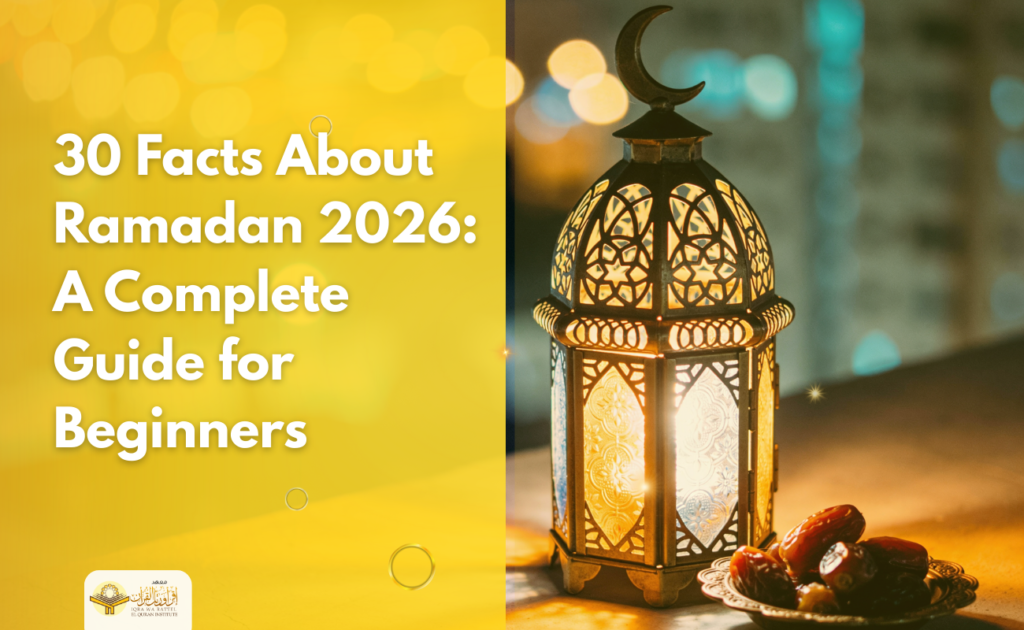
Are you curious about Ramadan? Maybe you’re a new Muslim, a non-Arab Muslim, or someone who wants to understand this special month better. These 30 facts about Ramadan will help you learn everything in a simple, friendly way.
Ramadan is the ninth month of the Islamic calendar. It’s a blessed time when Muslims around the world fast, pray, and grow closer to Allah. Let’s explore interesting facts about Ramadan that will help you understand and appreciate this holy month.
What is Ramadan? (Quick Overview)
Before we share the 30 facts about Ramadan, here’s a simple answer:
Ramadan is a special month when Muslims fast (don’t eat or drink) from sunrise to sunset. It’s not just about skipping food. It’s about prayer, giving to others, reading Quran, and becoming a better person.
Now, let’s dive into the facts.
30 Facts About Ramadan (Easy to Understand)
Facts About Ramadan’s Meaning and Timing
Fact 1: Ramadan is the 9th month in the Islamic lunar calendar.
Fact 2: The word “Ramadan” comes from the Arabic word “ramida” which means “scorching heat.” It reminds us to purify ourselves spiritually.
Fact 3: Ramadan can last 29 or 30 days, depending on when the moon is seen.
Fact 4: The Islamic calendar is based on the moon, so Ramadan moves about 10-11 days earlier each year on the Gregorian calendar.
Fact 5: Muslims in different countries may start Ramadan on different days by 1 day because of moon sighting differences.
Facts About Ramadan Fasting
Fact 6: Fasting in Ramadan is called “Sawm” in Arabic. It is one of the Five Pillars of Islam.
Fact 7: Muslims fast from dawn (Fajr time) until sunset (Maghrib time). This can be 11-16 hours depending on where you live.
Fact 8: During fasting hours, Muslims do not eat, drink (even water), smoke, or have intimate relations.
Fact 9: Fasting is not just about food. It also means avoiding bad behavior like lying, backbiting, and anger.
Fact 10: Children, elderly people, pregnant women, breastfeeding mothers, travelers, and sick people are exempt (don’t have to fast).
Facts About Ramadan Meals
Fact 11: The pre-dawn meal before fasting is called Suhoor (or Suhur). It’s like breakfast eaten very early.
Fact 12: The meal to break the fast at sunset is called Iftar.
Fact 13: Muslims traditionally break their fast by eating dates first, following the example of Prophet Muhammad (peace be upon him).
Fact 14: Iftar is often a time for families and communities to eat together, strengthening bonds.
Facts About Ramadan and the Quran
Fact 15: The Quran was first revealed to Prophet Muhammad during Ramadan over 1,400 years ago.
Fact 16: Muslims try to read the entire Quran during Ramadan. The Quran has 30 sections (Juz), so many people read one section each day.
Fact 17: Special night prayers called Taraweeh are performed in mosques during Ramadan, where the Quran is recited.
Facts About Ramadan’s Special Night
Fact 18: There is a very special night in Ramadan called Laylatul Qadr (the Night of Power or Night of Decree).
Fact 19: Laylatul Qadr is better than 1,000 months (over 83 years) of worship. This means one night of sincere worship equals more than a lifetime.
Fact 20: Laylatul Qadr falls in the last 10 nights of Ramadan, most likely on the 27th night.
Fact 21: On Laylatul Qadr, angels come down to earth, and Allah accepts many prayers.
Facts About Ramadan Spirituality and Rewards
Fact 22: Every good deed in Ramadan earns greater rewards than in other months.
Fact 23: Muslims believe that during Ramadan, the gates of Heaven are opened, the gates of Hell are closed, and devils are chained.
Fact 24: Ramadan teaches self-control, patience, and gratitude.
Fact 25: Fasting helps Muslims understand the hunger of poor people and encourages charity.
Fact 26: Muslims give Zakat al-Fitr (a small charity) before Eid, making sure poor people can celebrate too.
Facts About How Ramadan Ends
Fact 27: Ramadan ends with a joyful celebration called Eid al-Fitr (the Festival of Breaking the Fast).
Fact 28: On Eid, Muslims pray a special morning prayer, wear new or clean clothes, give charity, visit family, and eat delicious food.
Fact 29: Children often receive gifts or money during Eid celebrations.
Facts About Ramadan Around the World
Fact 30: Over 1.8 billion Muslims worldwide observe Ramadan, making it the largest annual religious observance on Earth.
Why Do Muslims Fast During Ramadan?
You might wonder: why go through all this? Here are the main reasons:
- Obedience to Allah: Fasting is a direct command from Allah in the Quran
- Spiritual growth: It’s a time to focus on prayer and reading Quran
- Self-discipline: Learning to control hunger teaches control in other areas
- Empathy: Feeling hunger helps us understand and help the poor
- Purification: Fasting cleans the body and soul
- Forgiveness: Muslims seek Allah’s forgiveness for past sins
Common Questions About Ramadan (FAQ)
1. Can you drink water during Ramadan fasting?
No. During fasting hours (dawn to sunset), Muslims cannot eat or drink anything, including water. But they can drink as much as they want before dawn and after sunset.
2. What happens if you accidentally eat while fasting?
If you eat or drink by mistake (truly forgetting you’re fasting), your fast is still valid. You just stop eating and continue your fast. Allah is Most Forgiving.
3. Do all Muslims have to fast?
No. Children (usually under 12-14), elderly people, pregnant/breastfeeding women, travelers, and sick people are exempt. If someone misses fasts, they can make them up later or feed a poor person for each day missed.
4. Can non-Muslims participate in Ramadan?
Yes! Non-Muslims are welcome to learn, join Iftar meals, or even try fasting to understand the experience. Many people appreciate the kindness and respect.
5. What should I say to a Muslim during Ramadan?
You can say “Ramadan Mubarak” (Blessed Ramadan) or “Ramadan Kareem” (Generous Ramadan). Both are warm greetings.
Practical Tips for Your First Ramadan (or Learning More)
If you’re new to Ramadan or want to learn more, here are simple tips:
1. Start small
Don’t try to do everything perfectly on day one. Focus on fasting properly first.
2. Wake up for Suhoor
Eating a good pre-dawn meal gives you energy for the day.
3. Stay hydrated
Drink plenty of water between Iftar and Suhoor.
4. Read Quran daily
Even 5-10 minutes a day helps you connect with Allah’s words.
5. Be patient with yourself
Fasting is challenging. It’s okay to struggle—Allah sees your effort.
6. Avoid negative behavior
Remember: fasting isn’t just about food. Control your anger, speech, and actions.
7. Make lots of dua (prayer)
Ramadan is the best time to ask Allah for your needs and forgiveness.
Conclusion: The Beautiful Month of Ramadan
These 30 facts about Ramadan show that this holy month is much more than just not eating. It’s a special time to grow spiritually, become closer to Allah, help others, and become a better person.
Whether you’re observing your first Ramadan or learning about it for the first time, remember that every effort counts. Allah loves when His servants try their best, even if they’re still learning.
If you want to understand the Quran better during this blessed month, consider learning Quran and Arabic online with qualified teachers who explain everything simply and clearly for non-Arabic speakers.
May Allah accept all our fasts, prayers, and good deeds. May this Ramadan bring peace, guidance, and blessings to you and your family. Ramadan Mubarak!