
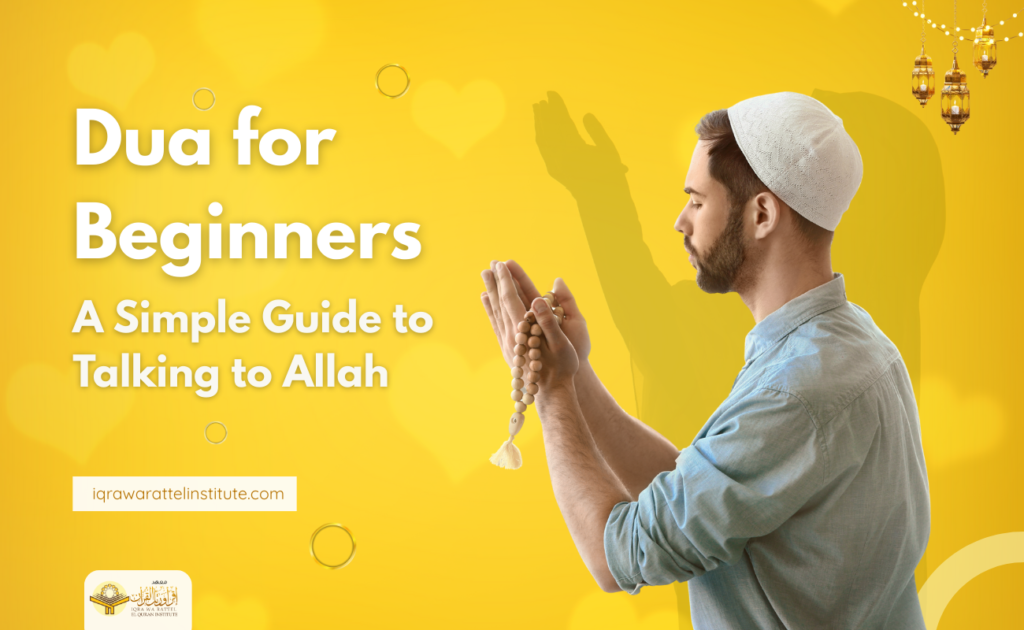
Welcome to the beautiful world of Islam! If you are a new Muslim, a non-Arabic speaker, or just starting your journey, you may have heard the word Dua (pronounced doo-ah). It is one of the most powerful and rewarding acts of worship in our faith. This guide is specifically designed to help you, the dua for beginners student, understand this concept and start making your own supplications today.
Dua is often translated as “supplication” or “prayer,” but it is much more personal than that. Think of it as a direct, one-on-one conversation with your Creator, Allah (God). It is your chance to ask for help, express gratitude, seek forgiveness, and share your deepest hopes and fears. The Prophet Muhammad (peace be upon him) said, “Dua is the very essence of worship.” [1]
In the next few minutes, we will break down everything you need to know about how to make dua in a simple, easy-to-follow way. We will cover the steps, the best times, and even some simple duas for daily life that you can use right away.
Table of Contents
What Exactly is Dua?
Dua is the act of calling upon Allah. It is an expression of your absolute dependence on Him and your belief that He alone can fulfill your needs. In Islamic theology, dua is considered the “brain” or the “core” of worship because it shows that a person has full trust in Allah’s power and mercy.
The Difference Between Dua and Salah
It is very common for beginners to confuse Dua with Salah. While both are forms of prayer, they serve different purposes in a Muslim’s life.
| Feature | Salah (Formal Prayer) | Dua (Supplication) |
|---|---|---|
| Timing | Five specific times a day. | Anytime, day or night. |
| Language | Must be performed in Arabic. | Can be in any language. |
| Format | Specific movements (standing, bowing, prostrating). | No specific movements required. |
| Requirement | Requires Wudu (purity) and facing the Qibla. | Recommended but not strictly required. |
Dua is NOT Salah. Salah is a pillar of Islam and a formal obligation. Dua, on the other hand, is flexible, personal, and can be made at any time, in any language, and in almost any situation. This is a key point for every dua for beginners to remember: you do not need to wait for a specific time or place to speak to Allah. Whether you are walking to work, sitting on a bus, or lying in bed, your heart can always be in a state of dua.
The beauty of dua is its simplicity and accessibility. It is a direct line to Allah, requiring no intermediary like a priest or a saint. It is a gift that is open to everyone, regardless of their background, language, or how long they have been Muslim. Even if you have just taken your Shahada (testimony of faith) five minutes ago, your dua is heard and valued by Allah.
How to Make Dua: Simple Steps for Beginners
Making dua is easy, but there are certain recommended etiquettes (manners) that can make your supplication more effective and pleasing to Allah. These are the steps to make dua that scholars recommend:
1. Start with Praise and Glorification of Allah
Before you ask for anything, begin by acknowledging the greatness of the One you are speaking to. This shows respect and humility.
- Say: Alhamdulillah (All praise is due to Allah).
- Say: SubhanAllah (Glory be to Allah).
- Say: Allahu Akbar (Allah is the Greatest).
- Example: “O Allah, all praise and thanks belong to You. You are the King, the Most Merciful, the All-Powerful.”
2. Send Blessings upon the Prophet Muhammad (PBUH)
The Prophet Muhammad (PBUH) taught us that sending blessings upon him is a key to having our duas accepted.
- Say: Allahumma Salli ‘ala Muhammad (O Allah, send peace and blessings upon Muhammad).
- This is often called Salawat or Durood.
3. Ask with Sincerity and Certainty
Now, you can make your request. Be sincere in your heart and believe with absolute certainty that Allah can and will answer you in the best way.
- Raise your hands: This is a recommended Sunnah (practice of the Prophet).
- Be specific: Tell Allah exactly what you need.
- Be persistent: Ask again and again. Do not give up!
4. End with Praise and Salawat
Conclude your dua by repeating the first two steps: praising Allah and sending blessings upon the Prophet.
- Say: Alhamdulillah (All praise is due to Allah).
- Say: Ameen (O Allah, accept my prayer).
Can I Make Dua in English?
This is one of the most common questions for new Muslims and non-Arabic speakers. The answer is a resounding YES!
Allah created all languages. He understands every word, every thought, and every feeling in your heart, whether you express it in Arabic, English, Spanish, or any other language.
Key Takeaway: The most important thing is the sincerity and presence of your heart, not the language of your tongue. Speak to Allah as you would speak to a trusted friend, using your own words.
Simple Duas for Daily Life
While you can always use your own words, it is also beautiful to learn some short Arabic duas with translation that the Prophet Muhammad (PBUH) taught us. These are powerful and cover common situations.
| Situation | Arabic (Transliteration) | English Translation |
|---|---|---|
| Before Eating | Bismillah | In the name of Allah. |
| After Eating | Alhamdulillah | All praise is due to Allah. |
| Leaving the Home | Bismillahi tawakkaltu ‘ala Allah | In the name of Allah, I rely on Allah. |
| Seeking Forgiveness | Astaghfirullah | I seek forgiveness from Allah. |
| When in Distress | Ya Hayyu Ya Qayyum, bi rahmatika astagheeth | O The Ever-Living, O The Sustainer, by Your Mercy I seek help. |
Learning these simple duas for daily life is a great way to start integrating Islam into your routine.
1-Dua Listen & Repeat
اللَّهُمَّ إنِّي أَعُوذُ بكَ مِن زَوَالِ نِعْمَتِكَ، وَتَحَوُّلِ عَافِيَتِكَ، وَفُجَاءَةِ نِقْمَتِكَ، وَجَمِيعِ سَخَطِكَ.
English:
O Allah, I seek refuge in You from the removal of Your blessings, the change of Your protection, the suddenness of Your punishment, and from all that displeases You.
Transliteration:
Allahumma inni a‘ūdhu bika min zawāli ni‘matik, wa taḥawwuli ‘āfiyatik, wa fujā’ati niqmatik, wa jamī‘i sakhaṭik.
2-Dua Listen & Repeat
اللَّهُمَّ إنِّي أَعُوذُ بِكَ مِن شَرِّ مَا عَمِلْتُ، وَمِن شَرِّ مَا لَمْ أَعْمَلْ.
English:
O Allah, I seek refuge in You from the evil of what I have done and from the evil of what I have not done.
Transliteration:
Allahumma inni a‘ūdhu bika min sharri mā ‘amilt, wa min sharri mā lam a‘mal.
3-Dua Listen & Repeat
اللهم إني أعوذُ بكَ منَ الهمِّ والحزنِ، وأعوذُ بكَ منَ العجزِ والكسلِ، وأعوذُ بكَ منَ الجُبنِ والبخلِ، وأعوذُ بكَ مِن غلبةِ الدَّينِ وقهرِ الرجالِ.
English:
O Allah, I seek refuge in You from the evil of what I have done and from the evil of what I have not done.
Transliteration:
Allahumma inni a‘ūdhu bika min sharri mā ‘amilt, wa min sharri mā lam a‘mal.
4-Dua Listen & Repeat
اللَّهُمَّ اغْفِرْ لي وَارْحَمْنِي وَاهْدِنِي وَارْزُقْنِي.
English:
O Allah, forgive me, have mercy on me, guide me, and provide for me.
Transliteration:
Allahummaghfir lī warḥamnī wahdinī warzuqnī.
5-Dua Listen & Repeat
اللَّهُمَّ مُصَرِّفَ القُلُوبِ صَرِّفْ قُلُوبَنَا عَلَى طَاعَتِكَ.
English:
O Controller of hearts, direct our hearts toward Your obedience.
Transliteration:
Allahumma muṣarrifal-qulūb, ṣarrif qulūbanā ‘alā ṭā‘atik.
6-Dua Listen & Repeat
اللهم انفَعْني بما علَّمتَني وعلِّمْني ما ينفَعُني وزِدْني عِلمًا
English:
O Allah, benefit me with what You have taught me, teach me what will benefit me, and increase me in knowledge.
Transliteration:
Allahumma infa‘nī bimā ‘allamtanī, wa ‘allimnī mā yanfa‘unī, wa zidnī ‘ilmā.
7-Dua Listen & Repeat
اللَّهُمَّ إنِّي ظَلَمْتُ نَفْسِي ظُلْمًا كَثِيرًا، وَلَا يَغْفِرُ الذُّنُوبَ إِلَّا أَنْتَ، فَاغْفِرْ لِي مِنْ عِندِكَ مَغْفِرَةً، إِنَّكَ أَنْتَ الغَفُورُ الرَّحِيمُ.
English:
O Allah, I have greatly wronged myself, and none forgives sins except You. So forgive me with forgiveness from You. Indeed, You are the Most Forgiving, the Most Merciful.
Transliteration:
Allahumma inni ẓalamtu nafsī ẓulman kathīrā, wa lā yaghfirudh-dhunūba illā anta, faghfir lī min ‘indika maghfirah, innaka antal-ghafūrur-raḥīm.
8-Dua Listen & Repeat
اللهمَّ إنَّي أعوذُ بك من شرِّ سمْعي، ومن شرِّ بصري، ومن شرِّ لساني، ومن شرِّ قلْبي، ومن شرِّ منيَّتي.
English:
O Allah, I seek refuge in You from the evil of my hearing, my sight, my tongue, my heart, and my desires.
Transliteration:
Allahumma inni a‘ūdhu bika min sharri sam‘ī, wa min sharri baṣarī, wa min sharri lisānī, wa min sharri qalbī, wa min sharri maniyyatī.
9-Dua Listen & Repeat
اللَّهُمَّ إني أعوذُ بكَ من مُنكراتِ الأخلاقِ والأعمالِ والأهواءِ والأدواءِ.
English:
O Allah, I seek refuge in You from reprehensible character, deeds, desires, and diseases.
Transliteration:
Allahumma inni a‘ūdhu bika min munkarātil-akhlāq, wal-a‘māl, wal-ahwā’, wal-adwā’.
When is the Best Time to Make Dua?
While you can make dua anytime, there are special times when your supplications are more likely to be accepted. Try to catch these moments!
- In Sujud (Prostration): The closest a servant is to his Lord is when he is prostrating. Make dua while your forehead is on the ground during Salah.
- Between the Adhan and Iqamah: The time between the call to prayer (Adhan) and the start of the prayer (Iqamah) is a blessed time.
- The Last Third of the Night: This is roughly the hour before the Fajr (dawn) prayer. Allah descends to the lowest heaven and asks, “Is there anyone asking, so that I may grant him his request?”
- While Traveling: Duas made by a traveler are accepted.
- When it is Raining: This is a moment of mercy from Allah, making it a good time to ask.
Common Questions About Dua for Beginners
We know you have questions, and that is a sign of a strong desire to learn! Here are answers to a few common concerns:
Q: Do I need to have Wudu (Ablution) to make Dua?
A: No, you do not need Wudu to make dua. You can make dua at any time, even without Wudu. However, having Wudu is recommended as it is a state of purity and can help you feel more focused and connected.
Q: Why isn’t my Dua being answered?
A: This is a question everyone asks! Remember that Allah answers every dua in one of three ways [2]:
- He grants what you asked for immediately.
- He delays it and saves it for you in the Hereafter (which is better).
- He prevents a harm from reaching you that was equal to what you asked for.
Never think your dua is ignored. Allah knows what is best for you, and His timing and decision are always perfect. Keep asking!
Q: Do I have to raise my hands?
A: Raising your hands is a beautiful and recommended Sunnah (practice of the Prophet) and a sign of humility and asking. However, if you are driving, working, or in a public place, you can make dua silently in your heart or with your tongue without raising your hands.
Practical Tips for Your Dua Journey
Starting a new spiritual habit can be challenging, but the rewards of making dua are immense. To help you make the most of your personal conversation with Allah, here are a few practical tips to keep you motivated:
1. Make Dua a Habit
Do not just make dua when you are in trouble or need something urgently. While Allah loves to help us in our times of need, He also loves to hear from us when things are going well. Make it a daily habit—when you wake up, before you sleep, and throughout your day. A simple “Thank You, Allah” for a beautiful sunset is a powerful dua.
2. Ask for the Hereafter
While it is perfectly fine to ask for worldly things—like a good job, health, or success in exams—always remember to include requests for the Hereafter. Ask for forgiveness, for a peaceful heart, and for a place in Paradise (Jannah). This keeps your perspective balanced between this life and the next.
3. Ask for Others
One of the secrets to having your own duas accepted is to make dua for others. When you pray for your family, friends, the Muslim community, or even those who have wronged you, the angels respond by saying, “Ameen, and for you the same.” It is a beautiful way to spread kindness and gain blessings at the same time.
4. Use Allah’s Beautiful Names
Allah has 99 Names that describe His attributes. When you ask for something, try to use the name that relates to your request. This shows that you recognize His specific power.
- If you need provision or a job, call upon Ar-Razzaq (The Provider).
- If you need forgiveness, call upon Al-Ghafur (The Forgiving).
- If you are feeling unloved or lonely, call upon Al-Wadud (The Most Loving).
5. Be Patient and Trust the Process
Sometimes we feel like our prayers aren’t being answered. During these times, remember that Allah is Al-Hakim (The All-Wise). He knows exactly what you need and when you need it. Your job is to keep asking and keep trusting. The act of making the dua itself is a form of success, as it keeps you connected to your Creator.
Conclusion: The Power of Dua
Dua is your spiritual lifeline. It is the moment you acknowledge that you are weak, but you have a Lord who is All-Powerful. It is the moment you realize that no matter how big your problem is, Allah is Greater.
For every dua for beginners student, remember this: Allah loves to be asked. He is waiting for you to call upon Him. Do not let the language barrier or the fear of doing it “wrong” stop you. Just open your heart and speak.
We encourage you to continue your journey of learning. Understanding the Quran and the Arabic language will deepen your connection to Islam and enrich your prayers. If you are looking for a clear, simple path to learn, consider exploring our online courses designed specifically for non-Arabic speakers. Start your journey today and unlock the full beauty of your faith.
May Allah accept all your supplications and grant you success in this life and the next.
Wa’alaikum assalam wa rahmatullahi wa barakatuh (And upon you be peace, and the mercy of Allah, and His blessings).