
Introduction: A Special Prayer at Iftar Time
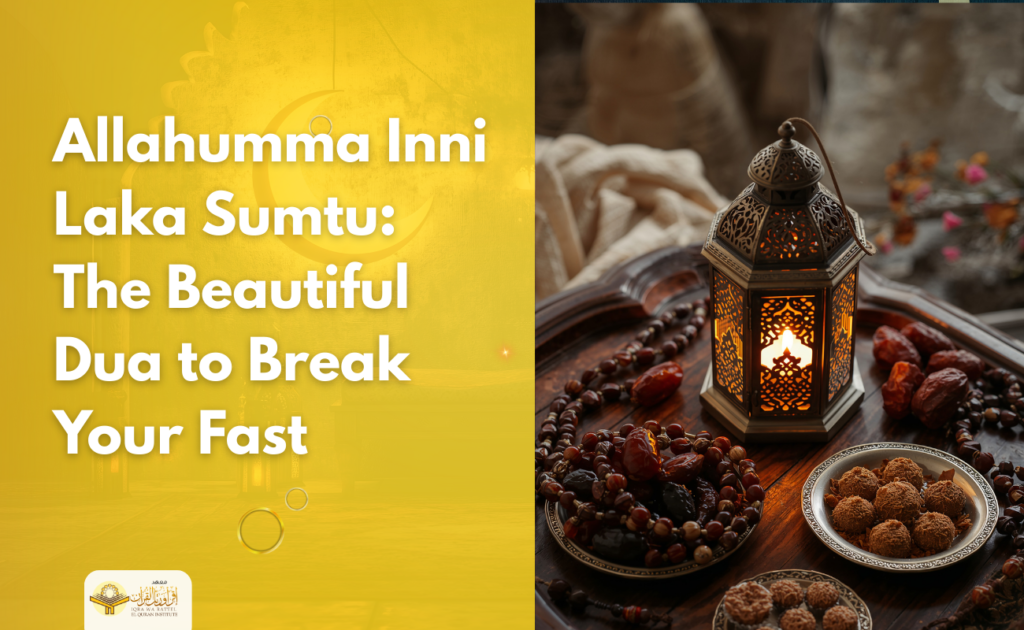
When the sun sets during Ramadan and it’s time to break your fast, there’s a beautiful dua (prayer) that many Muslims recite. This prayer is “Allahumma Inni Laka Sumtu” – a simple yet powerful way to connect with Allah at the moment of iftar.
If you’re a new Muslim or learning about Islamic practices, you might have heard this phrase but weren’t sure what it means or when to say it. Don’t worry – this guide will explain everything in simple English, so you can understand and use this blessed dua with confidence.
Whether you’re fasting during Ramadan or on voluntary fasting days, learning allahumma inni laka sumtu wa bika amantu will help make your iftar more meaningful and spiritually rewarding.
What Does “Allahumma Inni Laka Sumtu” Mean?
Let’s break down this beautiful Arabic phrase word by word:
“Allahumma Inni Laka Sumtu”
اللَّهُمَّ إِنِّي لَكَ صُمْتُ
Simple Translation:
“O Allah, I fasted for You”
This short dua acknowledges that your fast was done sincerely for Allah alone, not to impress others or for any worldly reason.
The Complete Dua:
Many Muslims recite the longer version: “Allahumma inni laka sumtu wa bika amantu wa ‘alayka tawakkaltu wa ‘ala rizqika aftartu”
اللَّهُمَّ إِنِّي لَكَ صُمْتُ وَبِكَ آمَنْتُ وَعَلَيْكَ تَوَكَّلْتُ وَعَلَى رِزْقِكَ أَفْطَرْتُ
Full Translation:
“O Allah, I fasted for You, I believed in You, I put my trust in You, and I break my fast with Your provision.”
Word-by-Word Breakdown (Easy Pronunciation Guide)
Let’s learn each word so you can say it correctly:
-
- Allahumma (Al-lah-hum-ma) = O Allah
-
- Inni (In-nee) = Indeed I / Verily I
-
- Laka (La-ka) = For You
-
- Sumtu (Sum-tu) = I fasted
-
- Wa (Wa) = And
-
- Bika (Bi-ka) = In You
-
- Amantu (A-man-tu) = I believed
-
- ‘Alayka (A-lay-ka) = Upon You
-
- Tawakkaltu (Ta-wak-kal-tu) = I put my trust
-
- ‘Ala (A-la) = Upon
-
- Rizqika (Riz-qi-ka) = Your provision
-
- Aftartu (Af-tar-tu) = I break my fast
Pro Tip: Listen to audio recordings online to hear the correct pronunciation. Practice saying it slowly before Ramadan begins!
When Should You Say This Dua?
The best time to recite allahumma inni laka sumtu is:
Right before breaking your fast – Just as the Maghrib (sunset) prayer time enters
Before taking your first bite or sip – Even before drinking water or eating a date
During Ramadan fasting – Every single day of the blessed month
During voluntary fasts – Like Mondays, Thursdays, or the white days (13th, 14th, 15th of Islamic months)
The Moment of Acceptance
The Prophet Muhammad (peace be upon him) taught us that the dua of a fasting person at the time of breaking the fast is accepted by Allah. This makes iftar time very special – your prayers are more likely to be answered!
So when you say “allahumma inni laka sumtu wa bika amantu,” you’re not only thanking Allah for the food, but also expressing your sincere intention and faith.
Why Is This Dua Important?
1. It Purifies Your Intention
When you say “I fasted for You,” you’re reminding yourself that your fast is an act of worship for Allah alone. This keeps your intention pure and sincere.
2. It Expresses Gratitude
By saying “I break my fast with Your provision,” you’re thanking Allah for the food and blessings He has given you.
3. It Strengthens Your Faith
The phrase “I believed in You and put my trust in You” is a powerful declaration of your faith (iman) and reliance (tawakkul) on Allah.
4. It Follows the Sunnah
Although there are different narrations about exact wordings, remembering Allah at iftar time is from the beautiful practices of the Prophet (peace be upon him).

Other Duas You Can Say at Iftar
If you find the longer version difficult to memorize at first, here are other simple, authentic duas for breaking your fast:
Option 1: The Simplest Dua
“Dhahaba al-zama’ wa abtalat al-‘urooq wa thabata al-ajr in sha Allah”
ذَهَبَ الظَّمَأُ وَابْتَلَّتِ الْعُرُوقُ وَثَبَتَ الأَجْرُ إِنْ شَاءَ اللَّهُ
Meaning: “The thirst is gone, the veins are moistened, and the reward is confirmed, if Allah wills.”
Option 2: The Shortest One
“Bismillah” (In the name of Allah)
This alone is blessed and sufficient!
Option 3: General Gratitude
“Alhamdulillah” (All praise is for Allah)
Remember: The most important thing is that you say something with sincerity, even if it’s simple. Allah looks at your heart, not just your words.
Common Questions About Breaking Fast Duas
Can I say the dua in English?
Yes! While Arabic is preferred, Allah understands all languages. If you’re still learning, you can say: “O Allah, I fasted for You and I’m breaking my fast with the food You provided.” Over time, try to learn the Arabic version.
What if I forget to say it?
Don’t worry! Allah is Most Merciful. Your fast is still valid. Just say a simple “Bismillah” or “Alhamdulillah” and continue. Try to remember next time.
Do I have to say it out loud?
No, you can say it silently in your heart or out loud – both are fine. Many people prefer to say it quietly.
Is this dua mandatory?
No, it’s not obligatory (fard), but it’s highly recommended (mustahabb). It’s a beautiful way to remember Allah and follow the Prophet’s guidance.
Can children say this dua too?
Absolutely! It’s wonderful to teach children this dua. Start with the simple version: “Allahumma inni laka sumtu” (O Allah, I fasted for You).
Practical Tips for Learning This Dua
Write it down – Keep a note card with the dua and its meaning near your iftar table
Listen daily – Play audio recordings during the day to memorize the pronunciation
Practice together – Say it as a family before iftar to help everyone learn
Set reminders – Use your phone to remind you 5 minutes before iftar time
Repeat consistently – Say it every single day during Ramadan – consistency builds memory
Read the translation – Understanding the meaning helps you connect emotionally with the dua
Conclusion: Make Your Iftar More Meaningful
Learning to say “allahumma inni laka sumtu” is a simple but powerful way to enhance your fasting experience. This short prayer reminds you why you fast, strengthens your connection with Allah, and makes your iftar moment more spiritually rewarding.
Remember, the complete dua – allahumma inni laka sumtu wa bika amantu – is a beautiful declaration of faith, gratitude, and trust in Allah. Even if you start with just the first part, you’re taking a meaningful step in your Islamic journey.
May Allah accept your fasts, answer your duas at iftar time, and grant you sincerity in all your acts of worship. Start practicing this blessed dua today, and watch how it transforms your fasting experience!
Want to Learn More Islamic Duas and Qur’an?
If you enjoyed learning this dua and want to understand more Arabic phrases, Qur’anic verses, and Islamic prayers, consider joining an online Islamic learning program. Many platforms offer beginner-friendly courses taught by qualified teachers who specialize in teaching non-Arabic speakers.
Learning to read Qur’an, understand daily duas, and connect with the Arabic language will deepen your relationship with Allah and make your worship more meaningful.
Ramadan Kareem and may your fasts be accepted!